
| Plant Trees for a Beautiful Future |
|
| How Does Your Garden Grow? |
|
Having species diversity is important in keeping populations of plants and animals healthy; resistance to disease, size, color, flavor, blooming times are inherited traits. The canopies provide twigs, leaves and Spanish moss that will be used for nests. Nuts, acorns, seeds and berries provide the fats, proteins, and carbohydrates that nourish animals. The leaves and other plant parts are hosts for many species of insects and invertebrates that will feed reptiles, amphibians, baby birds, and mammals. Leaf litter and soil are alive with microorganisms, earthworms, and subterranean critters that are such an important part of the food web. Decomposers digest organic matter and turn it into humus. Humus acts like a sponge holding water and nutrients and, in time, releasing them. Trees provide shade, the roots hold soil and prevent erosion, and, best of all, plants make their own food (photosynthesis), turning carbon dioxide and water into carbohydrates, and give up oxygen as a by-product. Fall and winter are the best time to plant trees and woody shrubs. Native trees provide Other trees found in dry open shade are the eastern redbud, dogwood, sweet gum, hickory, sparkleberry, service berry, and pines. These trees afford nuts, cones, berries, leaves and cover for birds and mammals as well as providing food to insects: beetles, wasps, butterflies, and many more. Just as we have preferences for our places to live, the plants also have adapted to sites with sun or shade, dry or moist soil. Trees which can live in very wet soils, like cypress and tupelo, are going to be happy in low wet areas where many other plants would not survive. Some trees that are also at home in moist soils are river birch, ironwood, walnut, tulip poplar, sweet bay magnolia, willow, and winged elm. These trees are favored by wildlife for their flowers, fruits, nuts, and nesting materials. The Salixspp, or willow, is larval food or host plant for Viceroy and mourning cloak butterflies. Moisture loving trees that will tolerate shade and make available larval food, nectar, and fruit are paw paws, American holly, and basswoods. These are just a few of the trees that are commonly found in our woodlands, but many of these are available in nurseries and from mail order catalogues. Nursery growers have made selections of many of our native plants for their ornamental and horticultural interest. Planting is also a great investment in the future because of the valuable service these trees provide to our two, four, and six legged friends. South Carolina has such great diversity in her natural landscape. We can bring some of it home and enjoy years of bountiful dividends by planting native trees. |
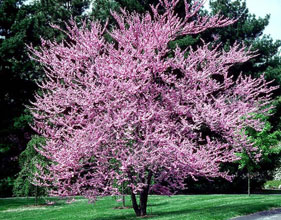 Trees native to the southeastern United States provide the essentials for wildlife – food, cover, affordable housing, nesting materials – and they promote species diversity. They also give wonderful interest and texture to home landscapes.
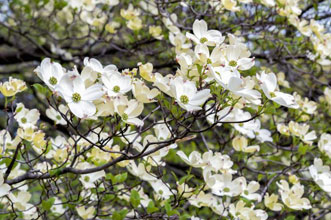 important ecological services and give seasonal interest to our landscaping. Fringe tree, Grancy greybeard, Chionanthus virginicus, grows in dry sun. It provides nectar, drupes, and seeds and is seen blooming in early spring with drifts of snowy white flowers, which are followed by glossy green leaves. A couple of other deciduous small trees providing fruit, cover and nesting sites are the American plums, crabapples, and hawthorns. Sumacs, winged and smooth, are wonderful plants that host Red-banded hairstreak butterflies. These usually will grow into small clumps and are very beautiful in the fall with their dark red leaves and clusters of fruit. Red maples give lots of seasonal interest to woods and roadsides, contribute sap and nesting places to birds and other wild things, and are one of the earliest nectar sources for honeybees.